
Background: Why Charity Marketing Campaigns Play by Different Rules
Nonprofit advertising does not play by the same rules as commercial advertising. A funny video and a discount will not cut it. The goal is to move mountains and change the world. You have to make people stop and think, even for a moment. You have to pull the viewer out of their comfort zone, get them thinking about something other than their own headache, and from there get them to act, donate, share, or simply care.
But how do you stand out in a world where ads flash from every direction and the news feed buries emotion within minutes? Three campaigns from the Kyiv International Advertising Festival (KIAF) in May give a vivid answer. They show how creative and unconventional thinking can break through the noise and deliver real impact for nonprofits.
The Goal: Change Thinking, Then Drive Action
All three campaigns shared one aim: make people feel, then make them act.
The target was not awareness. It was a social reaction, whether empathy, solidarity, or support. Each campaign used bold ideas, visual contrast, and strong symbolism to surface painful but necessary subjects: species extinction, the aftermath of natural disaster, and the survival needs of people living through war.
These campaigns were not selling anything. They built a bridge between a person and a problem. They made a complicated subject easy to grasp and gave the viewer one clear way to actually do something, whether that meant signing up for a newsletter, donating, or making a symbolic purchase. The point was to shift how people think and to move them to act.
Campaign 1: WWF and the Question “AI or Real?”

When Meta added its “AI Info” label to its platforms in 2024, it was clear that AI-generated content needed better context and transparency. WWF Bulgaria caught that moment and used the new feature to amplify its own message. The subject: endangered species. The format: entirely of the moment, and built on AI.
The timing was perfect. A post about a peacock chick was going viral on social media at exactly that point. People had noticed that if you searched Google for a peacock chick, the results were overwhelmingly AI-generated images. The real chick had disappeared onto the back pages of the search engine. That set off a debate about what is real and what is not, and WWF used the noise intelligently.
The campaign posed an uncomfortable question: will we one day see rare animals only in digital images, because they no longer exist in the wild? Meta’s “AI Info” label took on a new meaning as a symbol of disappearance, and WWF added its own label, “Extinction Info”, which said it directly: humans are behind that disappearance.
Images of three endangered species appeared on social media, built so that they raised the question: is this AI or real? The question sent people on to a quiz where they had to tell the genuine animal from the AI-generated version. If you wanted to see the answers, you had to enter your email address and subscribe to the WWF newsletter. Simple, with a strong emotional hook.
Newsletter subscriptions jumped 600% in a short period, more than 4,500 new subscribers. It was the best lead generation result in WWF Bulgaria’s history. That is a lot, considering the campaign was not selling anything.
Campaign 2: Billboards Made by the Flood
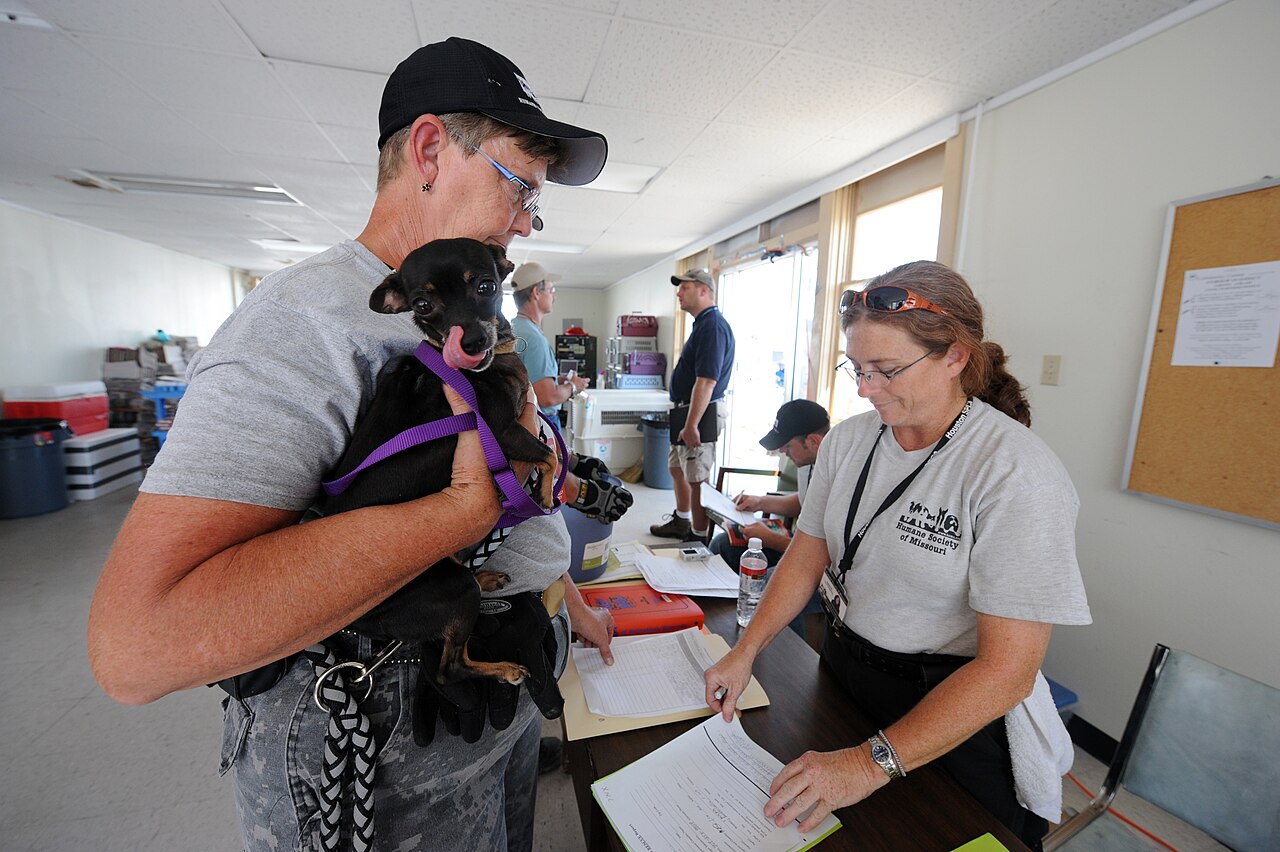
In September 2024 southern Poland was hit by severe flooding and the situation was catastrophic. Several animal shelters housing stray dogs were caught in it. The water level was high, far above the dogs’ heads. When the flood receded, this is what was left: a thick, muddy waterline on the shelter walls, and exactly zero zloty in state support.
The agency Saatchi & Saatchi and the Psia Brac association built a campaign to support the shelters. They took the same concrete blocks from the shelter walls, the ones with the mud line still visible, and painted onto them portraits of dogs that actually lived in those shelters. Then they moved the blocks to three Polish cities, Warsaw, Poznan, and Lodz, where there was no sign of any flood. Blocks appeared on the streets showing a dog standing with the waterline running higher than its head. A QR code let passers-by go straight to donating.
People photographed them, shared them, and the media picked the campaign up and amplified it.
The result: 150 media pickups, mass social media reach, and finally 210,000 zloty, roughly 45,000 euros, in donations, enough to start rebuilding the shelters before winter. And one of the dogs whose portrait was on a wall found a home because of the campaign.
Campaign 3: The Half-Full Coffee Cup

The war in Ukraine continues. Cities are bombed daily, homes collapse, people die. The front line is under constant fire. Soldiers need equipment that is not available anywhere, including vehicles for evacuating the wounded.
A fundraising campaign for a CASEVAC vehicle brought that situation onto the street in an unexpected way: through a cup of coffee. The idea was simple. Sell only half a cup of coffee, but charge full price. The entire sum goes to Ukraine’s Special Operations Forces. The cafe and the roaster covered one half, the customer paid the other. In return, the customer got half a cup of coffee. Cafes across Ukraine joined the campaign.
The cup also had a bullet hole in it. An image that needed no explanation. A coffee cup is a pause, a moment of calm. If it has a hole in it, that moment is broken. The message behind the campaign, “We believe the glass is still half full”, carried an unshaken optimism and the conviction that every small contribution counts.
As for numbers, what is known is that nearly 5,000 euros was raised in the first week, and the effect was felt. People bought, shared, and talked. If some people volunteer to go to the front, then the least everyone else can do is pay for a coffee and help buy an evacuation vehicle at the same time.
Results: What Three Charity Marketing Campaigns Actually Delivered
These three campaigns moved the boundary of what counts as “charity in marketing”. WWF used the AI debate at exactly the right moment and made people ask whether what they were looking at was even real. And if they wanted to know, they had to hand over their email address. They did.
The flood campaign did not draw a poster with dogs on it. They put concrete wall blocks with a muddy waterline onto the street. People photographed them, talked about them, and donated. It turned traditional outdoor advertising inside out: the ad was not a design, it was the actual consequence standing in front of you.
The coffee campaign brought the war onto people’s tables without dramatising it, through a short moment and a slightly smaller sip of coffee.
What connects them? Not that they “spread well” or “engaged people”. It is that they were precise. Not one of them wasted the audience’s time. All three pulled focus to the right place and made it clear without requiring anything extra to be explained.
The outcome was not “engagement” or “brand awareness growth”. The outcome was that people wanted to do something. Because the campaign showed them directly and precisely what needed doing.
Criticism
Charity campaigns get criticised almost every time, even when the idea is strong and the attention is huge. There is always someone in the comments asking why “so little” was raised, whether that sum changes anything at all, or why advertising money was spent on this in the first place.
That is the paradox of nonprofit marketing. If the campaign does not stand out, nothing happens. If it does stand out, people quickly decide the result could have been bigger, the impact wider, the budget more transparent. Campaigns get judged like sales campaigns: how much money came in, how many people “converted”. But charity never has a measure that straightforward.
The question is not only about sums. The question is whether the message reached people. Whether anyone felt the urge to react. Whether some part of the audience started seeing the subject differently afterwards. These three KIAF campaigns did that, and that makes them valuable, even if someone somewhere is rolling their eyes at a spreadsheet.
Fun Fact
WWF does not use artificial intelligence only in campaigns. It works with AI in everyday conservation too. After the Australian bushfires, more than 1,100 motion-sensor cameras were installed in 2019 and 2020, and over two years they took close to 7 million photographs. All of them went to Google’s Wildlife Insights platform, where AI helped identify more than 150 animal species at high speed and accuracy. The AI helped establish which species live in the area, and thanks to that it was discovered that some species thought lost after the fires have slowly started to return, koalas among them.
Lessons Learned
Precision before everything. All three campaigns made complicated subjects instantly graspable. No excess explanation, no “we are reaching out to you” copy. One clear image and one specific message.
The right timing is half the win. WWF used the AI debate and the peacock chick scandal. The Polish wall blocks appeared immediately after the floods. The coffee campaign came from the middle of a war. When the subject is already on the agenda, you do not have to over-advertise the campaign.
Physical presence works. A coffee cup in your hand. A wall block moved into the city. In both cases the problem was made visible and tangible. People react better to something that is “actually there”.
Digital works when it has substance. The WWF campaign showed that people will give up an email address for a good reason. People are not afraid to share their data when they feel it is going somewhere that means something.
A small step beats a big statement. Half a cup of coffee. A muddy wall. A parody of an AI label. These were simple, cheap, sharp elements that stuck and prompted action. No staged drama and no expensive video production required.
Charity does not mean boring marketing. All three campaigns proved that charity work does not have to moralise or push. You can make something sharp, smart, and built for social media without losing any of the impact.
Frequently Asked Questions
What makes charity marketing campaigns different from commercial advertising?
Commercial advertising sells a product with a price and a benefit. Charity marketing campaigns sell a change in behaviour, and the payoff for the viewer is emotional rather than material. That means the message has to do more work in less time, and it has to end with one clear, easy action.
Do nonprofits need big budgets to run effective campaigns?
No. All three KIAF campaigns were built on cheap, physical, or borrowed ideas: a social media label, salvaged concrete blocks, and half a cup of coffee. Media coverage did the amplification, not media spend.
What is KIAF?
KIAF is the Kyiv International Advertising Festival, an annual awards festival for creative advertising work with a strong showing of social and nonprofit campaigns.
How do you measure the success of a charity campaign?
Money raised is only one measure, and often the least useful one. Newsletter signups, media pickups, and whether the audience’s view of the subject changed all matter, because most charity campaigns are built to shift thinking before they shift wallets.
Related Reading on Shopping Scientists
- How e.l.f.’s “So Many Dicks” Campaign Shook Corporate America – a beauty brand takes on a social cause and makes the numbers work.
- Swiss Tourism Campaigns for Small Mountain Villages – what happens when the idea does the work instead of the media budget.
- How Free Ads for Small Cafes Brought Big Gains for a Small Agency – giving the work away as a strategy.