Background: Nobody Ever Wore an ALDI Logo With Pride
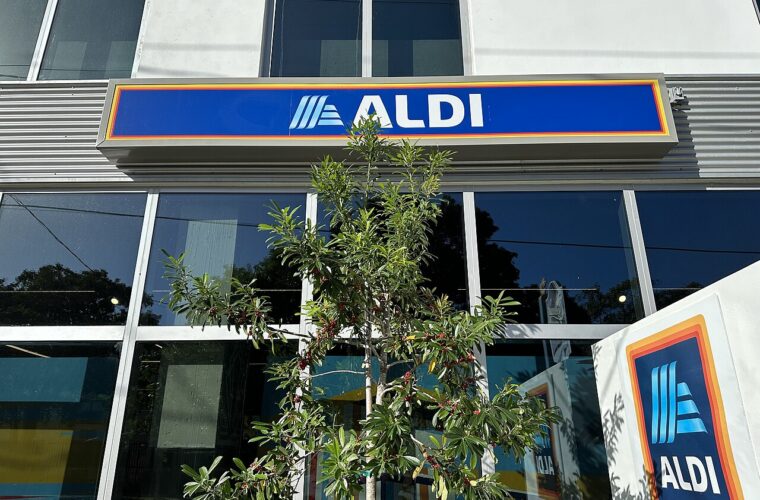
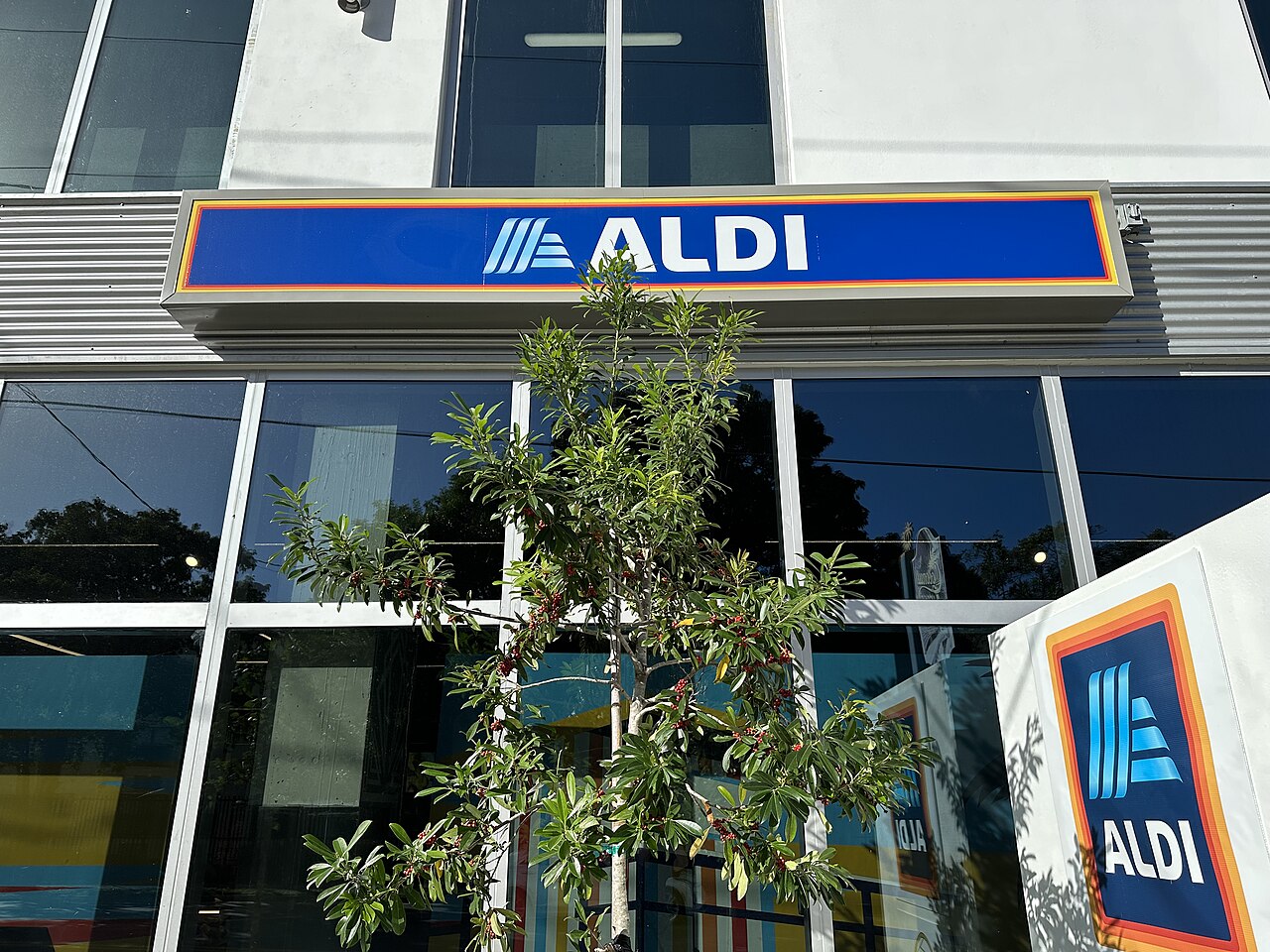
ALDI is Germany’s biggest grocery chain and one of Europe’s best-known retailers, founded in 1946 by brothers Karl and Theo Albrecht. The business model has always been the same: few products, low prices, minimal decoration. No music in the shop, no attractive interior, not even proper shelving. Products often sit on pallets straight in their boxes. Everything serves the discount and efficiency.
ALDI’s strength is in the sales figures and its weakness is in brand image. ALDI is a place you go to save money. It is not a brand a customer particularly wants to be associated with. Nobody ever wore an ALDI logo shirt with pride. At least not before the 2020s.
A cultural shift happened in the 2020s. Ironic brands became desirable among Gen Z. Lidl socks. DHL T-shirts. IKEA blue bags. The more banal and “bad taste” the brand, the cooler it is to wear. Cheapness is not embarrassing, it is a statement.
ALDI saw an opportunity in that, and also noticed that beyond the joke, the ALDI logo has three stripes. Like Adidas. The name is similar, the visual is similar. The coincidence was too good to leave unused.
Campaign Description
ALDImania: Festival Fashion from a Discount Store
In 2022 ALDI Süd launched its first clothing collection, called “ALDImania”. Sweatshirts, hoodies, and T-shirts with the ALDI logo. Prices were deliberately, absurdly low. The first collection sold out in minutes.
In summer 2023 a second collection arrived, timed for festival season. ALDI positioned its clothes in a festival fashion context: cheap, fun, indifferent. Exactly what you wear in a muddy festival tent on day three. The collection sold out fast again.
In 2024 ALDI took ALDImania into the metaverse, where users could create avatars in ALDI clothing. The target audience was clearly Gen Z and the goal was brand awareness, not profit from clothing. The clothes were sold at cost.
Aldidas: A Poke at Adidas
In late 2024 in the UK and early 2025, ALDI released a collection called “Aldidas”. As you would imagine: sweatshirts, trainers, and tracksuit bottoms that look like Adidas products but carry the ALDI name and logo. Three stripes, a familiar font, but a price tag of 5 euros rather than 85.
The campaign was led by McCann Manchester and positioned ALDI directly alongside the sportswear brand. Nothing hidden and nothing shy, just provocation and a joke. ALDI’s message was: our products look the same but cost a tenth of the Adidas price. Everyone knows it, and that is what makes it funny.
The Aldidas trainers sold out in minutes. They appeared on eBay at several times the price by that same evening. ALDI landed a football team sponsorship deal where players wore Aldidas shirts. A discount supermarket logo on footballers’ backs was a visual that spread by itself.
Strategy
1. Turn your weakness into a joke and the joke into a brand. ALDI has always been a synonym for cheap taste. Instead of running from that, ALDI puts it front and centre. “Yes, we are cheap. Yes, our products resemble more expensive brands. And it is funny. And you love it.” Self-irony is hard to fake and hard to copy.
2. Sell at cost, earn through coverage. ALDI does not make money on clothing. The collections are sold essentially at cost. The profit comes from media coverage, brand awareness, and the fact that people come to ALDI to buy a T-shirt and leave with a trolley full of groceries. Merch is an advertising budget, not a product category.
3. Limited quantity creates irresistible demand. A product available in unlimited quantity is never cool. ALDI applies the same logic: make few, sell out fast, and a resale market appears on eBay. A five-euro ALDI sweatshirt selling for 40 euros on eBay is better advertising than any poster.
4. Provocation without the risk. Adidas was not happy. But what do you do? Sue a supermarket selling a five-euro parody? That looks like a giant bullying a small player. ALDI knew parody is legally protected and culturally funny. Risk-free provocation.
Results and Impact
Every ALDImania and Aldidas collection has sold out in minutes. The Aldidas trainers appeared on eBay immediately after selling out at several times the price, meaning a product bought for five euros was reselling for 40. On TikTok, ALDI merch has become a category of its own, and ALDI landed a football team sponsorship on the back of the Aldidas campaign. The ALDImania campaign won an MMA Smarties award in the mobile marketing category.
ALDI does not publish exact campaign results, but the indirect signs are clear: every collection sells out faster than the last, the brand’s social media growth spikes during campaign periods, and ALDI sits among Germany’s most valuable brands in the Kantar BrandZ 2025 ranking.
Merch is not a product category for ALDI. It is an advertising budget that brings customers into the shop who come for a shirt and leave with a trolley full of groceries.
Criticism
Is this really brand building or just a joke? Critics ask whether ALDImania actually changes people’s shopping habits or is simply five minutes of social media fame. ALDI remains a discount supermarket and most customers come for the price, not the merch. The question is whether brand favourability among Gen Z genuinely means more customers in the long run.
The legal line. Adidas has defended its three-stripe trademark aggressively in the past. ALDI is walking on legally thin ice. For now it functions as parody and Adidas has not responded publicly, but every next collection tests the boundary again. The legal risk exists even if it has not materialised.
The repetition problem. The first time is funny. The second time is nice. The fifth time is boring. The limited-collection model demands constant renewal, because a joke gets stale. ALDI has to find a way to keep the merch strategy fresh without becoming predictable.
Lessons Learned
1. Your weakness is your strength if you dare to laugh at it. ALDI is cheap. ALDI looks like Adidas. ALDI is not glamorous. All of those were once weaknesses. ALDI turned them around by deliberately making them the joke. ALDI does not pretend to be something else. It says: I am what I am, and that is cool enough. The lesson for marketers: do not run from your weakness. Put it on a hoodie.
2. Merch is not a product, merch is advertising. ALDI does not profit from clothing sales. They sell at cost. It is an advertising budget that the consumer puts on and carries around town. Every person in an ALDI-logo hoodie is a walking billboard who paid to wear it. Brilliantly simple: advertising the consumer pays you for.
3. A product available in unlimited quantity is never desirable. Supreme, Nike, ALDI. The same logic: make few, sell out fast, watch the resale price rise. It works because people want what they cannot have. A discount supermarket sweatshirt you cannot buy is more desirable than a 500-euro branded item you can buy any time. Scarcity creates value regardless of the starting price.
4. Parody is more powerful than direct advertising. ALDI does not say “our products are as good as Adidas.” That would be a boring claim. Instead it shows: “our products look like Adidas and cost a tenth.” The joke says more than the fact. And the joke travels. Nobody shares an ad that says “good quality at a low price.” Everyone shares an ALDI trainer that looks like an Adidas and costs five euros.
5. The cultural moment matters more than the campaign plan. ALDI’s success does not come from planning a merch strategy five years ahead. It comes from seeing a cultural moment, the ironic brand trend and Gen Z self-irony, and reacting fast. The message for marketers: better a small thing at the right moment than a big thing at the wrong one. Speed and cultural awareness beat budget.
Frequently Asked Questions
What is Aldidas?
Aldidas is an ALDI clothing collection launched in the UK in late 2024, deliberately styled to resemble Adidas sportswear, with three stripes and a similar font, but carrying ALDI branding and priced around 5 euros instead of 85.
Did Adidas take legal action over Aldidas?
No. Adidas has historically defended its three-stripe mark aggressively, but suing a supermarket over a five-euro parody would read as a giant bullying a small player. Parody also carries legal protection. The risk remains, it just has not materialised.
Does ALDI make money from its clothing?
Essentially no. The collections are sold at cost. The return comes from media coverage, brand awareness, and footfall, as people come in for a shirt and leave with groceries.
Why do limited drops work for a discount brand?
Because scarcity creates desirability independently of price. Five-euro Aldidas trainers resold on eBay for around 40 euros the same evening, and that resale price is itself the advertising.
Related Reading on Shopping Scientists
- Liquid Death: A Fatally Different Water Brand – merch as the actual brand strategy.
- The $1.50 Costco Hotdog Since 1984 – the other way cheapness becomes an identity.
- Disneyland Souvenirs and Disney Adults – scarcity, collecting, and the resale market.