Background: A Beer Brand With a Phone Problem
70,000 people wanted a flip phone with no internet, no camera, and no apps. Calls and SMS only. 5,000 of these phones were made in 2024, so five thousand people got one. The other 65,000 went without.
The phone manufacturer was Heineken. A beer brand.
Heineken had previously commissioned research surveying Gen Z and millennials in the US, the UK, and the Netherlands. The numbers were telling. 90% admitted they scroll their phone even when out with friends, roughly seven times over the course of an evening. A third said they would like to put the phone away but cannot. 60% thought they would enjoy music events more if they could let go of the screen.
For Heineken the problem was specific. Their entire brand is built on social life. When people sit in a bar scrolling, Heineken’s brand promise does not work. The beer is not bad, it is that being present has gone and no emotion gets made.
Campaign Description
A Phone You Cannot Do Anything With
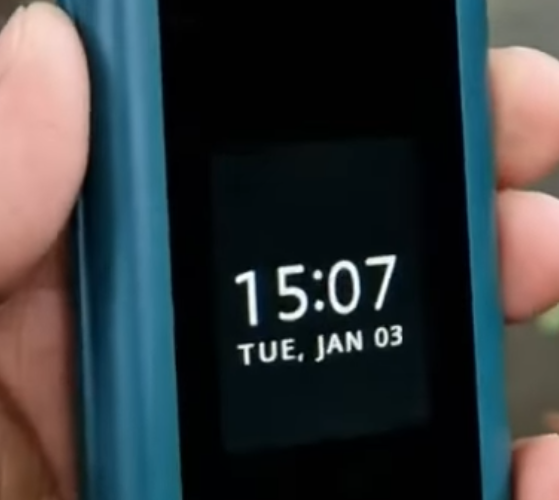
Heineken approached two partners. Bodega is a Boston streetwear brand that knows what young people want. HMD is a Finnish company that makes Nokia phones and knows how to build them. Together they made The Boring Phone: a flip phone based on the Nokia 2660 Flip that makes calls and sends texts. It did nothing else.
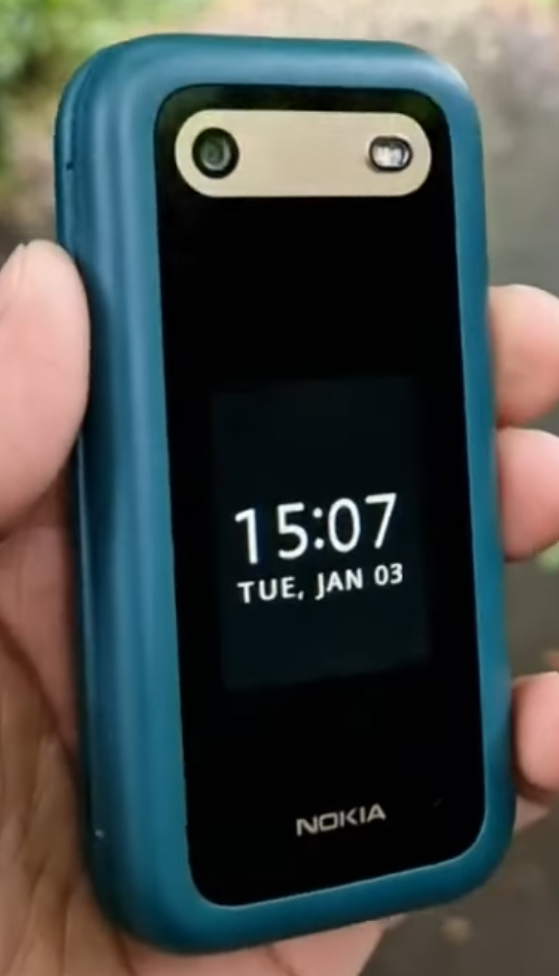
The phone’s appearance stood out though. A transparent shell, holographic stickers, a green pixel display like it was 2003. Two clinking Heineken bottles in standby mode. Snake was on the phone, but deliberately built so the game would end quickly, so nobody would get stuck playing too long. The whole graphic design was calculated cleverly: Y2K nostalgia for a Gen Z who never lived through it.
Milan, April 2024
The launch took place on 18 April at Milan Design Week. Heineken threw a party where guests had to put their smartphones away. LePub creative director Bruno Bertelli said afterwards: “It was the first design week event where nobody was filming the DJ. People were just there.”
15,000 people registered in the first hour. In total more than 70,000 people tried to get a phone. 24,000 names went on a waiting list. There were only 5,000 phones.
An App for Those Who Missed Out
A second move came in October 2024. Boring Mode is a free app that turns your existing smartphone “boring”, blocking apps, notifications, and the camera for as long as you choose. The idea was the same, but now anyone could try it, not just the 5,000 lucky phone owners.
At the same time Heineken tested infrared technology at concerts that beamed a message onto phone screens: put the phone away. It was trialled at large events in Mexico and Amsterdam.
Strategy
A product, not an ad. Heineken could have made a 30-second commercial where friends put their phones on the table and laugh. Everyone has seen ads like that and almost nobody would have written about it. But a physical phone is another story. Vogue does not write about beer ads. Vogue writes about design objects.
Zero euros on media. The whole campaign was built on PR and organic coverage. No media was bought. As Bertelli put it: “We chose a PR and influencer-led approach to leverage the influence of creators in shaping social behaviour.” The media was given a reason to write, but the media got no money.
Scarcity as fuel. 5,000 units was deliberately too few. Supreme has built a business over 30 years on the principle that less is more. Heineken used the same logic for one campaign. The 65,000 people who did not get a phone talked about it, posted, complained, waited. All of that was free advertising for Heineken.
Not the first time. The Boring Phone was not Heineken’s first “product as advertising” campaign. Earlier they made The Closer, a bottle opener that shuts your laptop, and in Brazil the Gaming Fridge. “TH3 G4M1NG FR1DG3” was a Heineken Brazil campaign with a simple, smart idea: a beer fridge with computer hardware built into it, motherboard, processor, graphics, memory, so it keeps the beer ice cold and the computer from overheating at the same time. The gamer does not have to pause the game to get a drink from the fridge, because it is all one box.
Heineken has an internal strategy called Culture Pulse, whose purpose is to find problems in culture that the brand can specifically solve. The Boring Phone was that strategy’s best result.
Results and Impact
The Boring Phone was seen 7.1 billion times. For comparison, Heineken collected 9.5 billion impressions across all of 2024, an all-time company record.
Over 2,000 publications in 113 countries wrote about the campaign. Among them were 51 of the world’s most influential media outlets, including Vogue, GQ, Wired, The Guardian, Hypebeast, and Dezeen.
The most impressive number, though, is 100% positive media coverage. That is worth saying twice, because it almost never happens. Even the most successful campaigns usually attract a critic or a sceptic. With the Boring Phone, none. Negative reactions simply did not exist.
Heineken called the Boring Phone its most successful PR campaign ever. The company did not publish specific sales figures, because the campaign’s goal was not direct sales. The focus was brand awareness, and Heineken said 2024 was the best year for its brand communications overall.
The awards shelf filled up too: ADC Europe Gold in design. Two Merit awards at The One Show, for design and PR. Cannes Lions 2025 bronzes for the campaign’s extensions. Heineken as a whole won 27 Lions at Cannes in 2025. By The Drum’s creative rankings, Heineken is the most awarded brand in the world.
Criticism
5,000 phones, 7 billion impressions. One phone per 1.4 million views. Almost nobody actually got one. Croma Unboxed published an article headlined “Heineken made a Boring Phone, but you can’t buy it”. The campaign talked about a problem, but the solution was so limited that it did not actually change anyone’s behaviour. The Boring Mode app countered that, but Heineken did not share download numbers. Which leaves critics asking whether the numbers were worth sharing at all.
A beer brand talking about addiction. There is no small amount of irony here. A brand that sells an addictive substance tells people they should be less addicted to their phones. The campaign avoided the contradiction by focusing on social life rather than health. But think about it for a moment longer and the question stays in the air.
Did Heineken solve the problem or exploit it? A fair question. If you say phones ruin social life and offer a solution that 99.99% of people cannot use, are you dealing with the problem or selling it? Heineken would say they started a conversation. A critic would say they started a campaign.
Lessons Learned
1. A physical product is stronger than any advertisement. Vogue does not write about ads. Dezeen does not write about ads. Hypebeast does not write about ads. But all of them wrote about the Boring Phone. Because it was an object with a shape, a material, and a story. An ad is a message. A product is an experience. And experiences get written about.
2. Scarcity is free advertising. 5,000 units, 70,000 people who wanted one. Everyone who missed out posted about it. Every post was organic coverage. Heineken condensed that knowledge into one campaign and it worked exactly the way it works for Nike or Supreme.
3. A brand promise is not a slogan when you actually live it. Heineken’s promise is to make social life better. Most brands put the promise in the website footer and forget it. Heineken asked what actually gets in the way of your social life. The phone. And then built a solution to it. The promise became a product. That is the difference between a slogan and a brand.
4. One good idea can fill a whole year. The phone came out in April. The app in October. Infrared notifications at festivals. Awards collected through 2025. Heineken did not make a new campaign every month. They took one good idea and found new outputs for it six months running. That is cheaper and more effective than starting from zero every month.
5. You do not have to show your product to build your brand. There is almost no beer anywhere in the Boring Phone campaign. No bottles beyond one pixelated animation. No “grab a Heineken” message. And yet it is their most successful PR campaign ever. Because a brand is not a product. A brand is what you stand for.
Frequently Asked Questions
What is the Heineken Boring Phone?
A limited-run flip phone made by Heineken with streetwear brand Bodega and Nokia manufacturer HMD, based on the Nokia 2660 Flip. It makes calls and sends texts and does nothing else. 5,000 were produced.
Can you still buy the Boring Phone?
No. Only 5,000 were made and they were given away, not sold at retail. Heineken later released Boring Mode, a free app that blocks apps, notifications, and the camera on an existing smartphone.
How successful was the campaign?
7.1 billion impressions, coverage in over 2,000 publications across 113 countries, and 100% positive sentiment. Heineken called it its most successful PR campaign ever. No media was bought.
What is the criticism of the Boring Phone?
That one phone existed per 1.4 million impressions, so it changed almost nobody’s actual behaviour, and that a beer brand lecturing people about addiction carries an obvious irony.
Related Reading on Shopping Scientists
- Liquid Death: A Fatally Different Water Brand – another product built to be talked about.
- ALDI “ALDImania” and “Aldidas” – scarcity and merch as an advertising budget.
- Impossible Ads: Louis Vuitton, PODS and Maybelline – when the object is the medium.