
BACKGROUND
A bottled water on a store shelf usually struggles to stand out. Most water brands use similar visuals: mountains, springs, nature – the classic “pure and serene” imagery. The message is always the same: water is a healthy and balanced choice.
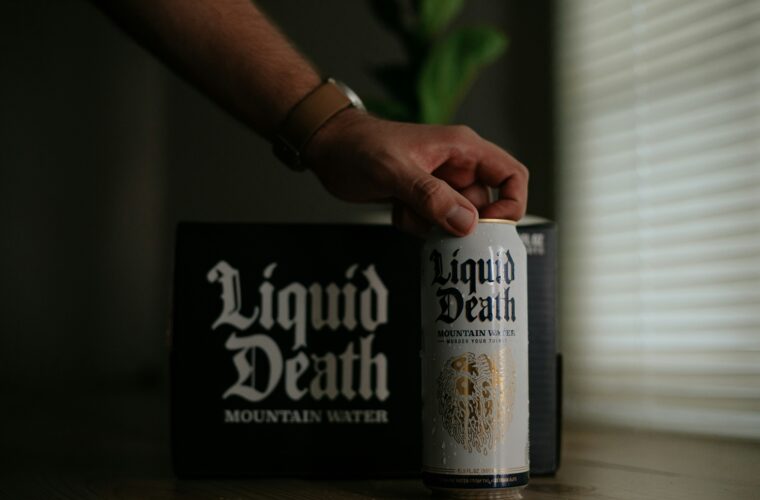
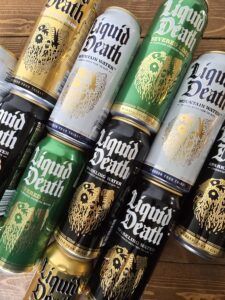
Liquid Death, launched in the U.S. in 2019, looks at first glance more like a beer or an energy drink.
The brand was created by former ad creative Mike Cessario. The idea began while he was working on a campaign warning about the health risks of energy drinks. Half-jokingly, he suggested to the client: “What if we just put water in a can and branded it like the craziest energy drink ever?”
The goal was to parody how absurdly “cool” the beverage industry tries to make its products. The client didn’t go for it, so Mike registered the trademark Liquid Death himself in 2017 – a name he later admitted was “the dumbest name I could think of.”
What problem does Liquid Death solve?
Cessario wanted to offer a healthy alternative to energy drinks and sodas – but without being boring. He noticed that viral and humorous marketing was mostly reserved for unhealthy products like beer, soda, or junk food. Their tagline says it all: “Murder your thirst.”
Liquid Death created a water brand that looks like the official drink of a rock concert, with ads as wild as any energy drink’s – only the content is the exact opposite: just clean water. The message is clear: The days are over when only beer and junk food could look cool.
Liquid Death also fights plastic pollution. Instead of plastic bottles, they use aluminum cans, which are easier to recycle. Part of the profits go toward reducing plastic waste. As they put it: “Once thirst is murdered, we’ll help kill plastic pollution too.”
In short, Liquid Death solves two problems at once: water doesn’t have to be boring, and it doesn’t have to come in plastic.
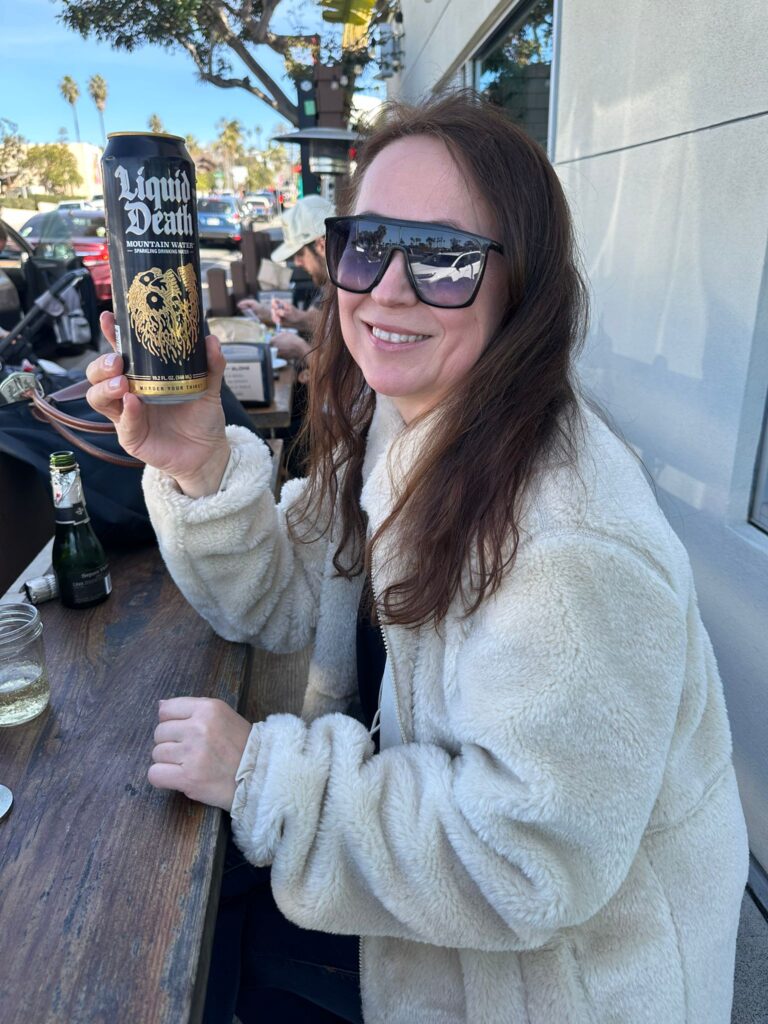
Liquid Death doesn’t aim to please – it aims to stand out. While most water brands have gentle or sophisticated names like Evian or Smartwater, Liquid Death does the opposite. The name sounds like a horror movie or a metal band. The can features a skull and a gothic logo. It shocks, sticks, and grabs attention – exactly what the brand is going for.
This isn’t water bought just to quench thirst – it’s an appearance product.
Customers choose it because it looks different, it’s funny, and it fits on social media. As Cessario puts it: the product should be so cool that people want to photograph and share it – without spending any money on marketing.
CAMPAIGN EXAMPLE
Liquid Death’s marketing is full of campaigns that would be unthinkable for other brands – but are perfectly in line for them. They aren’t afraid to go to extremes: blood, sweat, profanity, and dark humor are no taboos.
“BETTER THAN A FAT MAN’S BACK SWEAT” – an example of shock marketing
In summer 2023, Liquid Death launched a campaign titled “Better Than Back Sweat.” The insane ad was born from a real internet comment. An angry commenter on social media wrote: “I’d rather lick a fat man’s back sweat than drink Liquid Death!”
Liquid Death responded in their own wild style – by turning the comment into a real commercial. They brought in Zach “Zackass” Holmes, a comedian known from Jackass, whose body type fit the role they dubbed “The Sweater.”
Then came the blind test: people were asked to lick Zackass’s sweaty back and taste Liquid Death, to compare which one was better. Ice-cold canned water or a sweaty back?
Spoiler alert: Liquid Death won.
The video was deliberately gross and hilarious at the same time. Showing someone licking another person’s sweat was pure shock strategy – exactly the kind that grabs attention and gets media coverage.
The video ended bluntly: Even the biggest haters ultimately prefer water over sweat.
So Liquid Death turned a hate comment into viral content that spread across the internet.
It wasn’t their first stunt like this – it was actually part three in their “blind test” series. In earlier videos, people compared Liquid Death blindly to things like caviar juice, squid ink, and Wagyu burger puree. The reactions were predictably full of disgust.
In another test, angry commenters were challenged to identify Liquid Death among 10 bottled waters. When they guessed wrong – which they often did – they were shocked with electricity.
Such over-the-top ideas might be too much for a regular brand, but for Liquid Death, it has become a signature move – turning haters’ rants into marketing gold.
The “Better Than Back Sweat” campaign is a textbook example of using hate as fuel to create viral content. Strategically, it fits their core formula perfectly: shock + humor = attention.
OBJECTIVES AND RESULTS
This unconventional take on a water brand has been surprisingly successful. Backed by investors, Liquid Death has grown into a globally recognized beverage brand. In 2023, its retail sales in the U.S. and UK exceeded $263 million. In the U.S. alone, the brand was available in over 113,000 retail locations, including big names like Target, Whole Foods, and 7-Eleven.
The company’s valuation has climbed to over $1.4 billion in under five years. That’s a remarkable achievement considering it’s basically just water in a can – but Liquid Death has proven that bold differentiation can thrive even in a saturated market.
Compared to its competitors, Liquid Death positions itself as the rebellious alternative: if regular water is “boring” or “too sterile,” theirs is “punk.” That message has found an eager audience, and even major beverage brands are admitting that the Liquid Death phenomenon is unprecedented.
CRITICISM
Despite plenty of praise, Liquid Death’s marketing hasn’t been without criticism. Some marketing experts argue the brand relies too heavily on shock value and risks becoming a parody of itself.
Others question whether the product can sustain such a loud image long-term, or if the brand’s success is dependent on constant viral humor.
Still, the sales numbers show that their target audience likes this approach – and Liquid Death continues to surprise.
FUN FACT
Liquid Death didn’t stop at shock videos – they’ve also released music albums made from hate comments.
Back in 2020, they dropped their first record Greatest Hates – a play on Greatest Hits, but made entirely of angry comments. All lyrics were pulled from real emails and internet posts where people trashed the brand. The result? A surprisingly solid heavy metal album.
It gained a lot of attention and fans wanted more. The following albums were released on actual vinyl and sold as collectible items.
From a marketing perspective, it’s genius – every hate comment that might otherwise harm the brand becomes a joke shared by fans and the brand itself, with media coverage as a bonus.
LESSONS LEARNED
- Bold differentiation pays off. When the market is oversaturated, there’s room for those who dare to think differently.
- An ordinary product can be extraordinary. Even water isn’t boring when it’s packaged like a rock album.
- Authenticity sells. Humor, rebellion, and environmental action work when they’re real.
- Negativity is raw material. Even a random hate comment can become a brilliant campaign.
Niches create opportunities. If you’re the first, others will struggle to copy you.