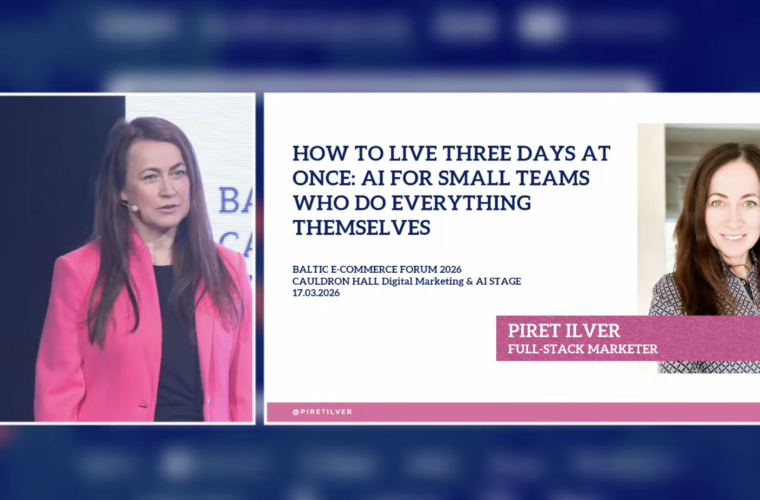
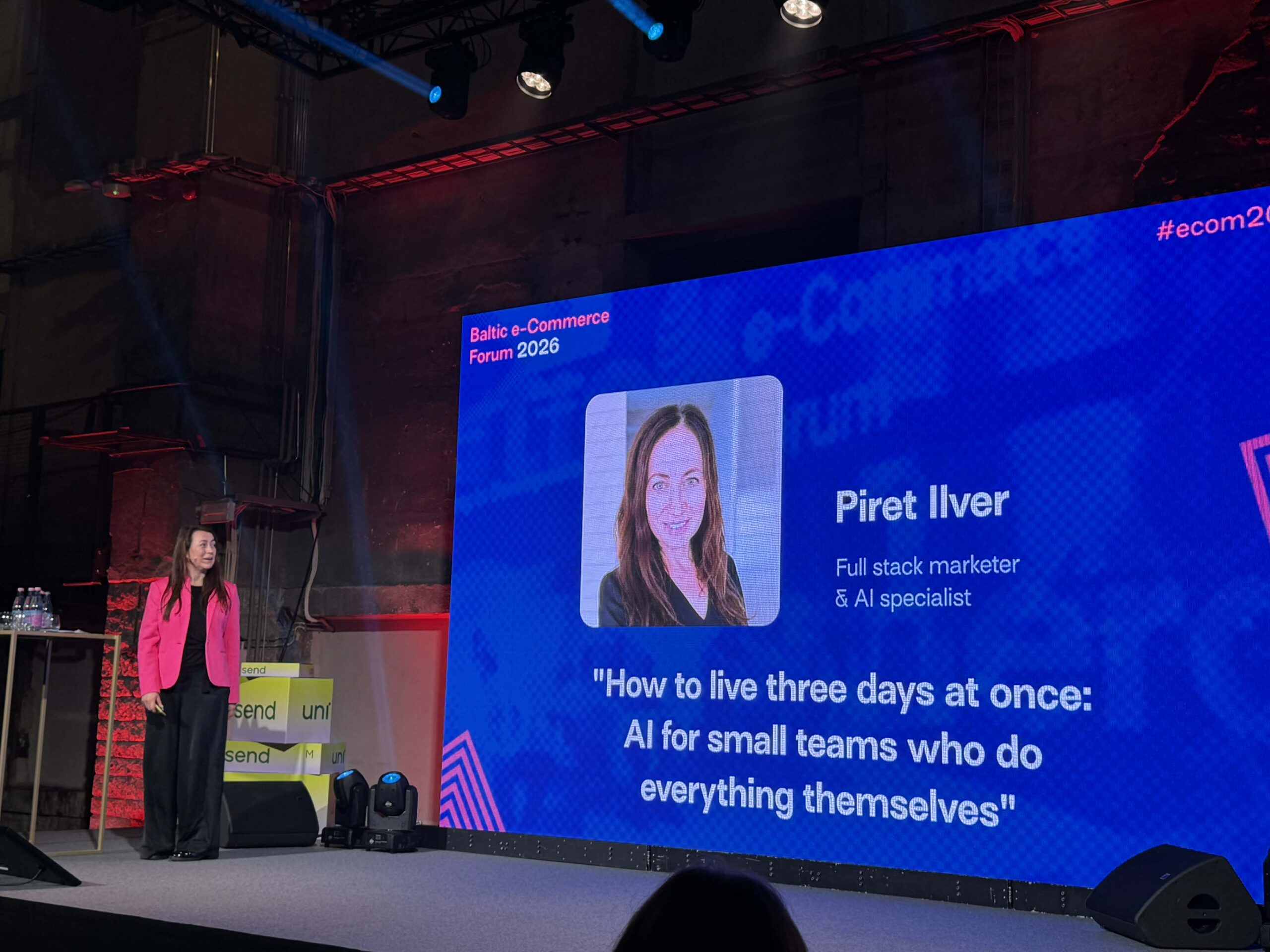
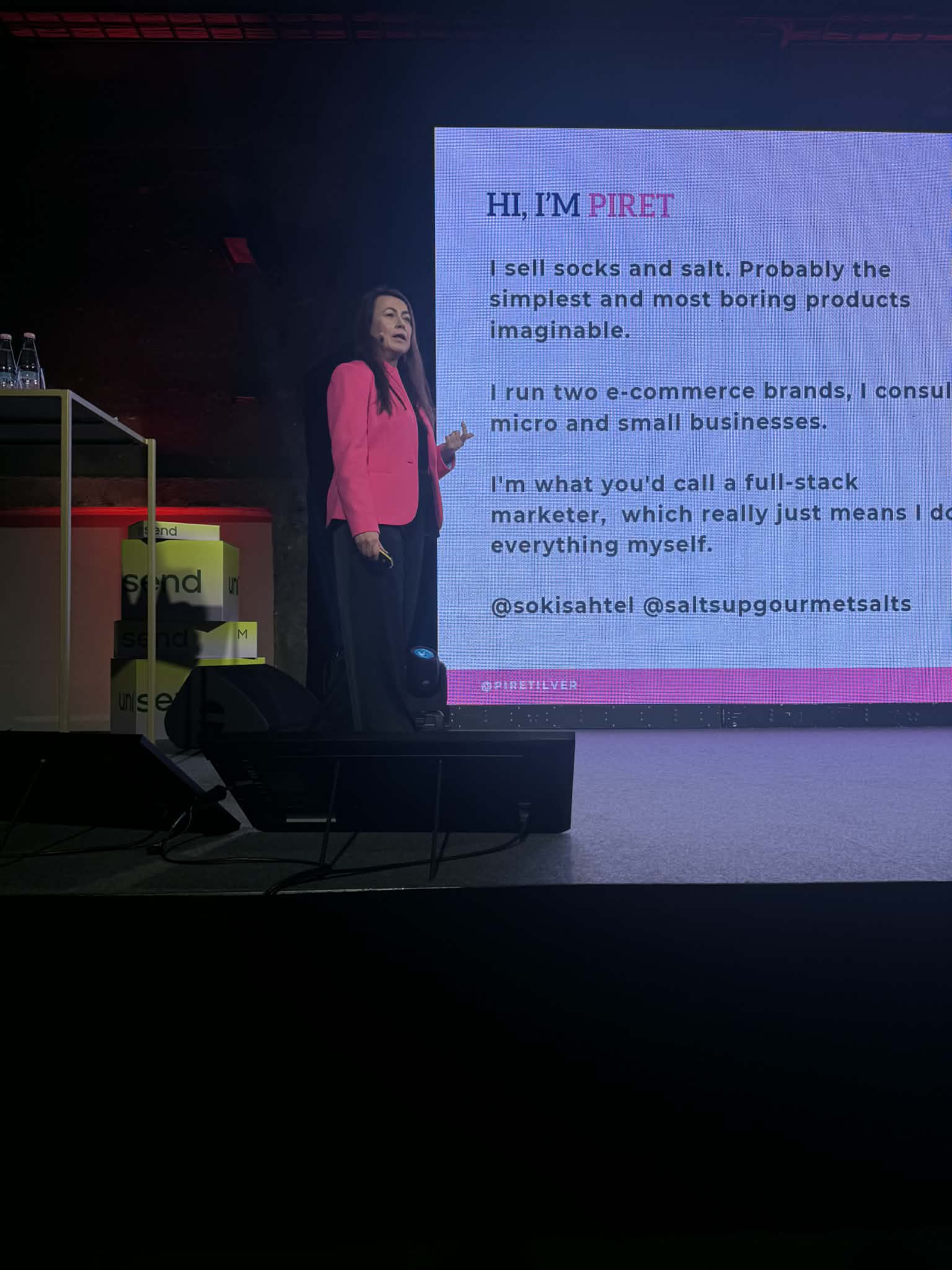
This article is based on my talk at the Baltic e-Commerce Forum 2026 in Tallinn, on the Digital Marketing & AI Stage. Here’s the full story behind the slides.
A Wednesday Morning That Used to Be a Wednesday, Thursday and Friday
Let me tell you about a morning last week. Nothing special. Just a regular Wednesday.
I sat down at my desk at eight. Coffee, laptop, chaos.
By eleven AM, this is what had happened: spring product photography for the new collection was done. Weekly social media content was created, reformatted for every platform, and queued. A technical SEO issue that Google flagged in Search Console was identified, diagnosed, and fixed. A blog article was being researched and drafted. And our developer? He was building a new feature for the store. Actual strategic, creative work.
All of this. Before lunch. On a Wednesday.
Six months ago, that same list would have been our entire week. Social media alone used to take a full day. Product photography was a whole production. Technical SEO? We’d wait for the developer, who was already busy with something else.
So what changed? Three specific tools. Let me walk you through them.
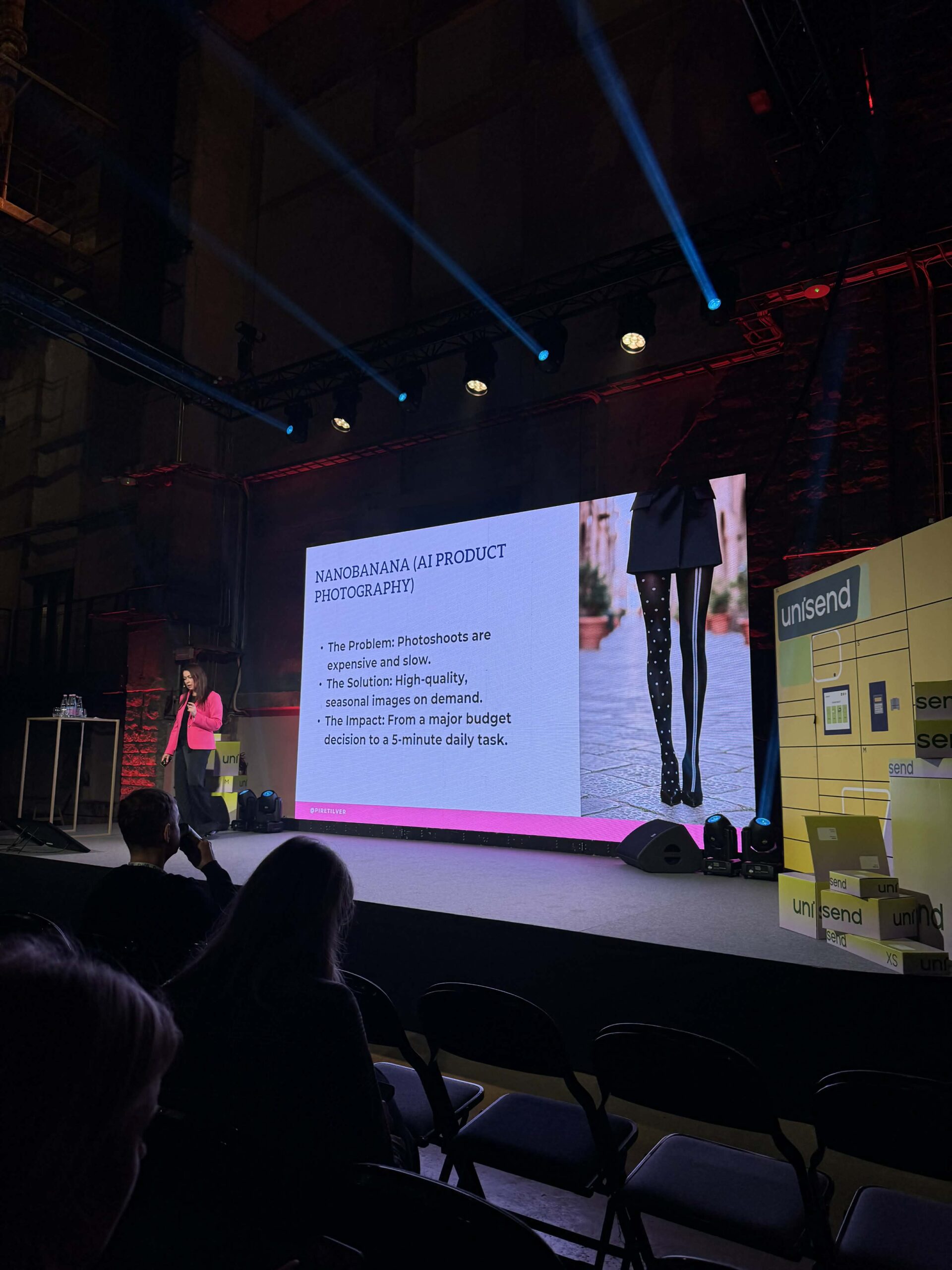
Tool 1: Nanobanana (AI Product Photography)
If you sell physical products online, you know what product photography costs. Per shoot, per product, per season. For a micro-business, every photoshoot is a budget decision. You sit there thinking: can I really justify another 800 euros for ten product photos? And usually the answer is: I’ll just reuse the old ones and hope nobody notices.
With Nanobanana, we generate product images we actually use. On our Shopify store, in newsletters, on social media. Seasonal themes on demand. Christmas gourmet salt gift set on a festive table? Five minutes. Summer sock collection on a beach? Before I finish my coffee. Valentine’s Day limited edition? Done before the idea is even cold.
It hasn’t replaced real photography. We still do shoots for lookbook content and lifestyle imagery. But it’s turned product photography from a major budget line into something we can do any day of the week. Need a quick hero image for a newsletter going out tomorrow? Five minutes. Want to test three different visual concepts before committing to a real shoot? Done.
That one shift alone changed how fast we can move. And speed matters when you’re competing with companies that have entire creative departments.
Tool 2: The Social Media Balance (Repurpose.ai + Claude + Nanobanana)
I want to be honest about something here, because I think a lot of AI talks skip this part.
We do a LOT of content with real people. Authentic content. Faces, stories, behind the scenes. That is the core, and it has to be. Your audience can tell the difference. Authentic content still performs better. That hasn’t changed. And I don’t think it will.
But here’s the problem. You shot that one amazing video with real people on Thursday. Great. But what about Friday? And Monday? And Wednesday? And every other day when your feed needs to stay alive but you’re packing orders?
That’s where the balance comes in.
We use a tool called Repurpose.ai. The workflow is simple: we make a TikTok, that’s where we’re active, that’s our real content. And Repurpose takes that TikTok and automatically pushes it to YouTube Shorts, to Facebook Reels, to Pinterest, to channels where we’re not actively creating content at all. We don’t optimize for those platforms. We don’t spend time there. But we fish there.
And the numbers are real. We’ve collected over a hundred thousand views from platforms where we literally did nothing except let Repurpose forward our TikToks. All of that for around 30 euros a month.
In a perfect world, yes, you’d customize everything for every platform. Different edits, different hooks, different captions. But as a small team, you have a choice: either you cast a wide net and collect those views without lifting a finger, or you spend your life endlessly optimizing for platforms you’ll never have time for anyway. For a micro-business, I’ll take the fishing every time.
For product visuals, Nanobanana fills the gaps. For copy, Claude helps us draft posts in our brand voice. For ideas when you’re staring at a blank screen at ten PM, data-driven suggestions instead of guessing.
The result is balance: real people, real stories at the center, and AI keeping the machine running consistently around it. Not replacing the authentic stuff. Amplifying it.
Tool 3: Claude Cowork (The Agent That Actually Does Things)
Claude Cowork has become the backbone of how our whole team operates.
It’s an AI agent that sits on your desktop and actually DOES things. Not just chats. It operates your browser, navigates websites, creates documents, analyzes data, fixes code.
But here’s what most people miss: you can connect your existing tools to it. We have Semrush connected. Google Search Console. Our Shopify admin. WordPress. Claude doesn’t just give advice. It actually goes INTO these tools, pulls data, finds issues, and fixes them.
Real example from last week: Google Search Console flagged duplicate FAQ structured data on our site. I showed the email to Claude. It opened our WordPress admin, identified two conflicting plugins, figured out that deactivating one directly would crash the site because of dependencies, and wrote a PHP code snippet to safely fix it. Ten minutes. Done. I was drinking coffee the whole time.
Does it always get it right the first time? No. Sometimes you need to steer it. Sometimes it takes a wrong turn, and you have to say, “No, not that plugin, the other one.” But even with the back and forth, what used to be half a day of Googling and developer back and forth is now twenty minutes. And if you’re nervous, you can keep it read-only at first and just let it tell you what to do.
Our developer now spends his time building new features. Strategic work. The kind of work you actually WANT your developer doing. Because the routine technical headaches? Claude handles those.
And it’s not just me. The whole team uses Claude Cowork now. Once they saw it actually saved real, measurable time, they didn’t need convincing. They just started using it for everything.
Tool 4: Kessu (My Own Custom AI Agent)
I went one step further and built my own AI agent.
Her name is Kessu. She runs on OpenClaw, an open-source framework, on a Mac Mini sitting under my desk. The last Mac Mini available in the Baltics, actually. I grabbed it just in time.
I talk to Kessu through Telegram. Like messaging a colleague. “Write an article about this.” “Research this competitor.” “Prepare a content brief for Monday.” And she does it. At two in the morning if needed, because unlike my actual colleagues, she doesn’t sleep.
Last month, Kessu wrote a full competitor analysis brief for a client. Researched six competitors, compared their positioning, pricing, social media strategy, and SEO performance. Delivered a structured brief I could send directly. For me to do that manually? A full day, minimum. And honestly, I’d probably procrastinate on it for a week before starting.
Here’s what I’ve learned. You do NOT need to know how to code to build something like this. I’m not a developer. What you DO need to understand is the landscape: how APIs work at a basic level, how tools connect to each other, what data flows where. That’s the literacy that matters now.
And you need to think about efficiency. Because here’s the thing nobody tells you about AI agents: every task costs tokens. And tokens cost money. If your agent isn’t optimized, if it’s doing ten steps when it could do three, it drains your wallet fast.
Building the agent wasn’t the hard part. Making it efficient, that’s the real skill. And that’s actually something we small business owners are good at. We’ve spent our entire careers doing more with less. It turns out that same skill is exactly what you need to run AI agents well.
The Bigger Picture: This Has Never Existed Before
So that’s my little AI zoo. Nanobanana, Claude Cowork, Repurpose.ai, Kessu. But there’s a bigger point here than just tools.
Never. Never in the history of small business have we had this kind of capability. Strategic AND technical capability. This has simply never existed before.
Two years ago, this was science fiction. One year ago, it was early adopter territory. Now it’s just… Wednesday.
The Window Won’t Stay Open Forever
But here’s the part that should make you uncomfortable.
Right now, most small businesses haven’t figured this out yet. They’re still doing everything manually. They’re still spending three days on what could take one morning.
And every day you use AI agents and your competitor doesn’t, the gap gets wider. Not narrower. Wider. Every single day.
They will catch up. Maybe in a year, maybe two. And when they do, this stops being a competitive advantage and becomes table stakes. The minimum requirement just to keep up.
So the question isn’t whether AI will change how small e-commerce teams work. It already has. The question is whether you’ll be the one who figured it out early, or the one trying to catch up later.
The Small Business Advantage Nobody Talks About
And I know what some of you are thinking. “This sounds complicated.” “I’m not technical enough.” “I don’t know where to start.”
I get it. I thought the same thing. I sell socks. I’m not supposed to be building AI agents.
But here’s something nobody talks about, and this is actually a real advantage we have as small businesses: security. Or rather, the lack of a security problem.
Big companies can’t experiment with AI the way we can. They have compliance departments, sensitive customer data, legal teams that need to approve every new tool. They move slowly because they have to.
We don’t have that problem. I sell socks. I’m not sitting on medical records or financial data. And most of you probably aren’t either. That means we can try things. We can experiment. We can plug an AI agent into our Shopify admin and see what happens, without a six-month security review.
That freedom to experiment fast? That’s a genuine competitive advantage. Use it while you have it.
Start With One Tool
You don’t have to do everything I did. You don’t have to build your own agent or connect five different platforms on day one.
Start with one tool. Pick your biggest bottleneck, the thing that eats most of your time, and find an AI tool that handles it. See what it does to your Tuesday.
The specific tools don’t matter. They’ll change, they’ll get better, new ones will appear. What matters is the principle: find where you’re wasting time, find an AI that can take it over, and get your time back.
I sell socks and salt for a living, and I figured this out. Believe me, you can too.
Thank you to Tõnu Väät for the invitation, and to the Estonian E-Commerce Association and Delfi for putting together an incredible event.
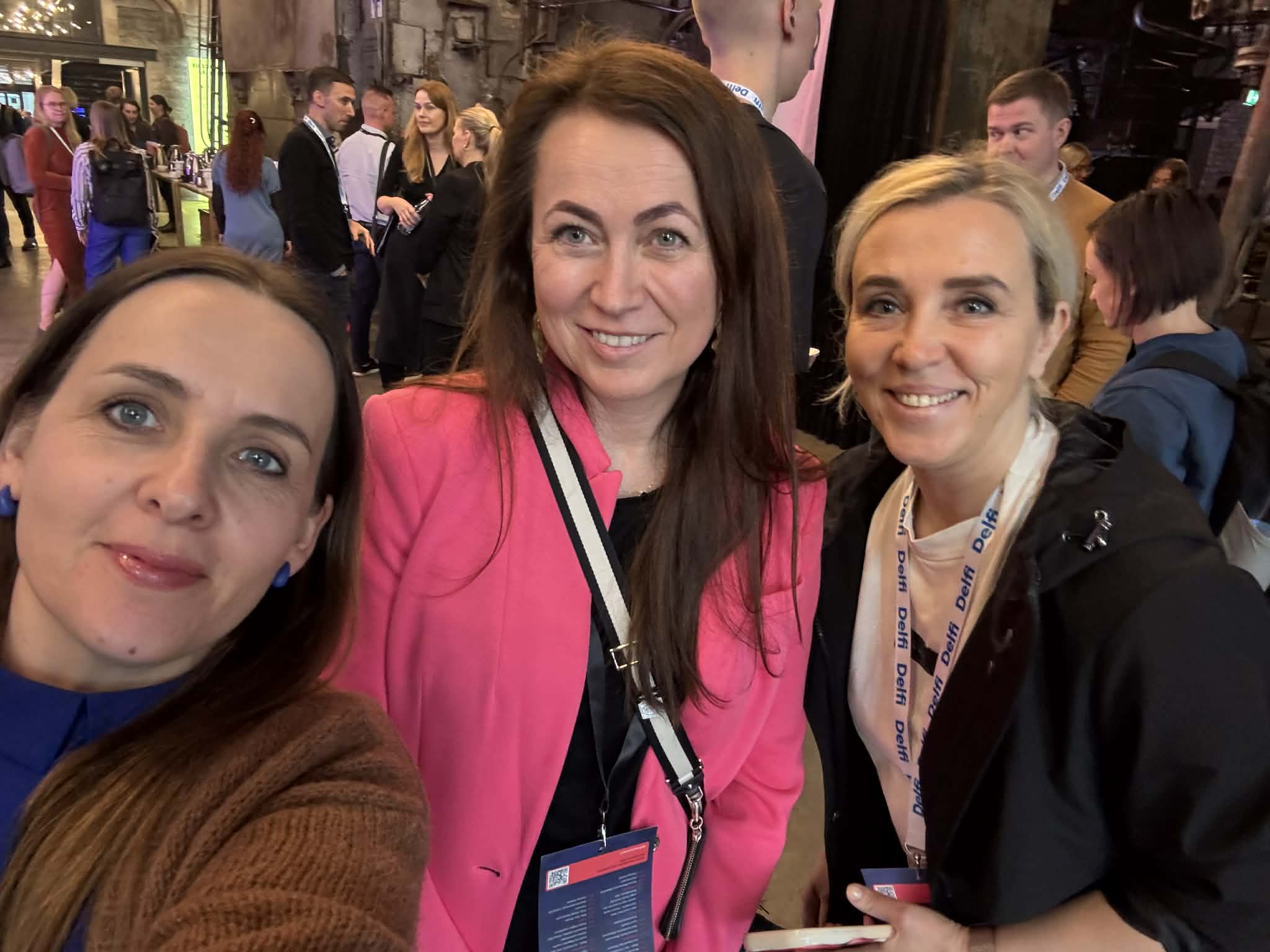
Piret Ilver is a digital marketer, e-commerce entrepreneur, and the founder of ShoppingScientists. She runs SaltsUp (international gourmet salts), Sokisahtel (Estonian sock retailer), and Museumist (art-themed socks). Find her on Instagram and LinkedIn @piretilver.